What Does RTP Mean? An In-Depth Guide on Return to Player

Return to Player, more commonly known simply as RTP, is a key concept in the gaming world. Whether you’re playing online slots, table games, or land-based casino games, you’ll come across this term. But what does RTP mean and how does it affect your gaming experience? We’ll explore this, why it’s important, and how it works. We’ll also show you how to use RTP to guide your gaming choices.
What Does RTP Mean?
Represented as a percentage, RTP stands for Return to Player and shows players how much they can expect to win back over a long period. For example, an RTP of 96%, theoretically means that for every £100 you bet, the game will return £96 in winnings. The £4 difference is used as profit for the house, or casino.
It’s important to keep in mind that RTP does not guarantee individual results, but acts as a long-term average. If the game has an RTP of 96%, this does not mean that you will win 96% for every £100 you bet. It simply gives you an indication of how much the game is likely to pay back over a long period.
How Does RTP Work?
RTP is typically encoded into the game’s software when developers create it. It is calculated by dividing the total amount returned to players by the total amount wagered and multiplying the result by 100 to give the RTP as a percentage.
The formula for calculating the RTP may be simple, but several other components shape the final percentage, most notably the game mechanics and volatility. Take the best Megaways slots, for example: they include dynamic reels with a tumble feature, multipliers and free spins. In table games such as roulette and blackjack, meanwhile, the type of bet you place also affects the game’s RTP.
Every game’s Return to Player percentage comes from millions of simulated spins and wagers. Because of that, your personal RTP over a short-term gaming session will probably differ from the official RTP the game lists. For this reason, RTP works as a long-term average across many rounds, and it says nothing certain about the outcome of an individual spin or bet.
RTP vs House Edge
RTP tells you the percentage returned to players, whereas the house edge is the percentage that represents the house’s, or casino’s, profit. Because the two figures are linked, each is the converse of the other. A blackjack game with a Return to Player RTP of 99%, for instance, carries a 1% house edge.
RTP and House Edge in Casino Games
In the table below, we’ve gathered the most popular games in casinos and highlighted their average RTP and house edge.
| Casino Game | Average RTP | House Edge |
| Slots | 92 – 98% | 2 – 8% |
| Classic Single Deck Blackjack | 99.5% – 99.7% | 0.3 – 0.5% |
| European Roulette | 97.3% | 2.7% (with an optimal roulette strategy) |
| American Roulette | 94.7% | 5.3% |
| Baccarat | 98.9% | 1.1% |
| Video Poker | 97 – 99.5% | 0.5 – 3% |
What is Volatility?
Volatility is another important term to understand when playing. It is usually used in slots and describes the size and frequency of payouts. There are five main levels of volatility, varying from low to high.
- Low Volatility: Low-volatility games pay out more regularly but generally have smaller wins. Since they are less risky, they are typically preferred by players who are just becoming familiar with how to play slots.
- Medium Volatility: Medium volatility games provide a balance between the other two levels.
- High Volatility: Meanwhile, highly volatile slots and games are riskier as wins occur less frequently, however, they can result in big wins.
The Connection Between RTP and Volatility
RTP and volatility are not directly connected. Although many of the best slots to play tend to be highly volatile, they can actually come in all levels of volatility. Therefore, finding a volatility that you’re comfortable with is essential.
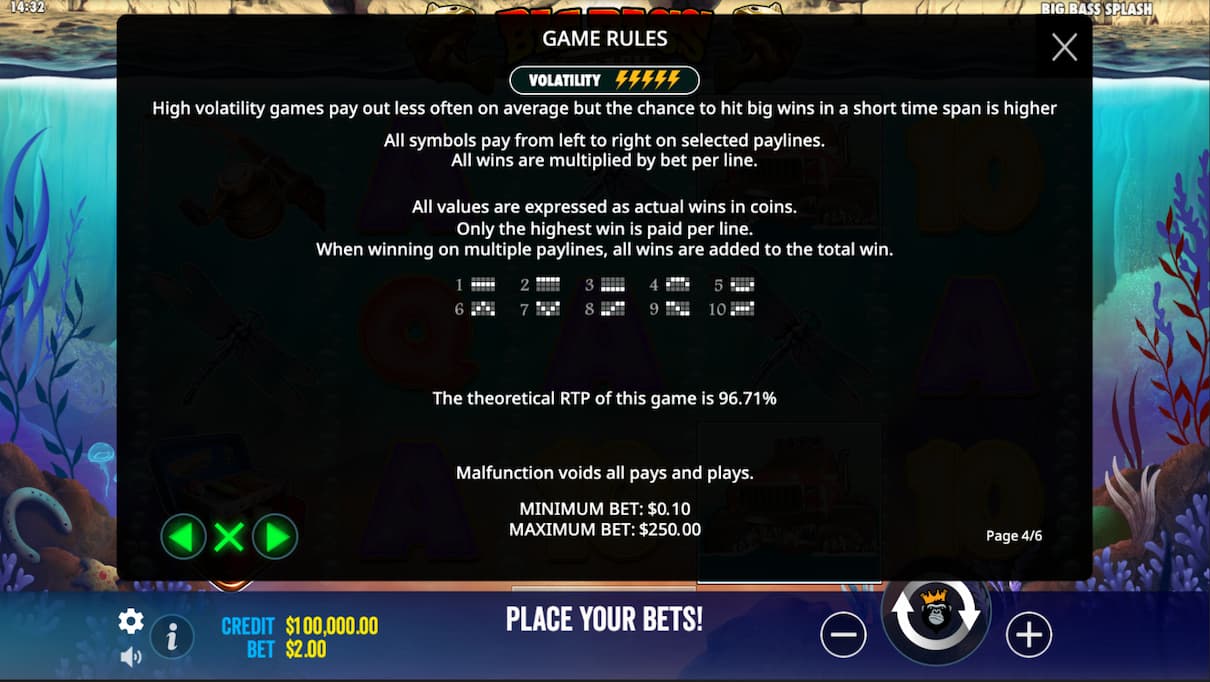
Available at the best slot sites, we’ve gathered the most popular high RTP online slot games for each volatility level below. Some developers display this information in the slot’s paytable. For instance, the image below shows the RTP and volatility of Hacksaw Gaming’s Big Bass Splash.
| High RTP slot | Gaming Studio | Average RTP | Volatility |
| 1429 Uncharted Seas | Thunderkick | 98.6% | Low |
| After Night Falls | Betsoft | 97.27% | Low-Med |
| Dr Jekyll Goes Wild | Barcrest | 98.11% | Medium |
| Big Bad Wolf | Quickspin | 97.34% | Med-High |
| Blood Suckers Megaways | Red Tiger | 97.66% | High |
What is RNG in Gaming?
RNG (or Random Number Generator) is an algorithm that produces random outcomes in games. The game’s RNG ensures that every spin, dice roll, and dealt card is random, unpredictable, and fair.
It is different from Return to Player as while this refers to the theoretical percentage a game will pay out, RNG provides fairness and randomness. It is RNG, not the former, that determines the result of every spin, coin toss, or shuffle.
How do I Find the RTP of a Game?
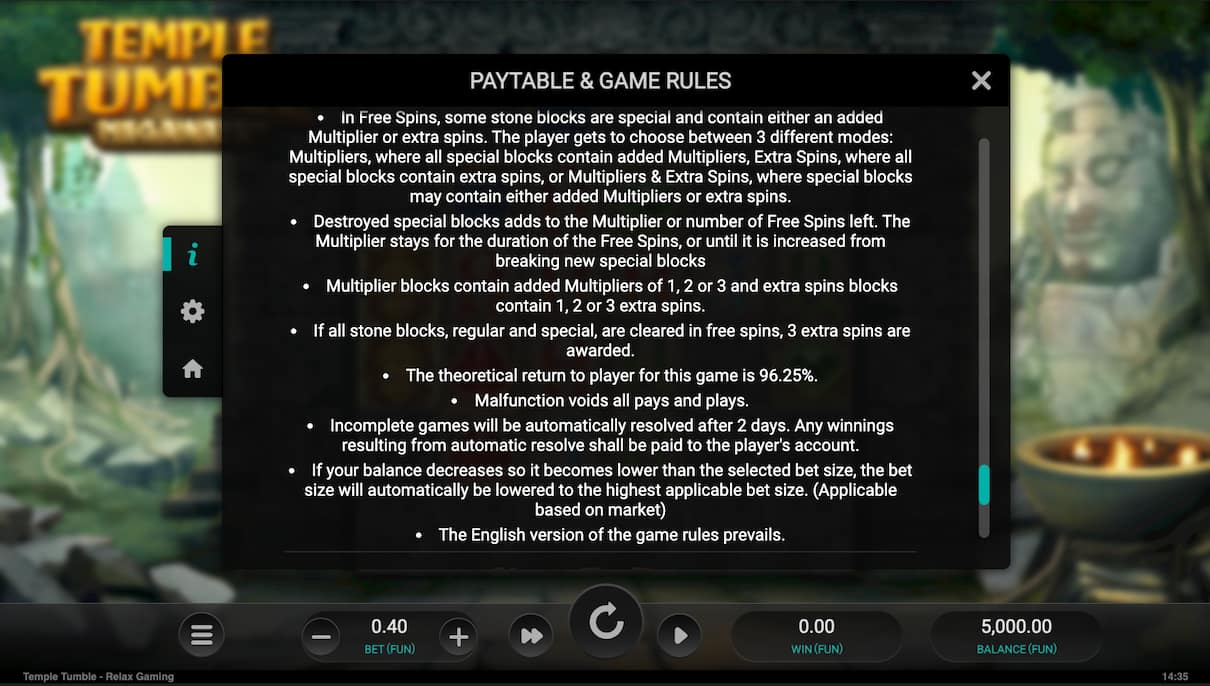
Finding a game’s RTP is an important step to help players make an informed decision. The best ways to get a game’s RTP include checking the slot’s paytable or finding the information on game review sites, or the software provider’s website. In the image below, you can see the different RTPs in the slot Temple Tumble (by Relax Gaming).
Top 5 Tips For Getting the Most Out of RTP
Knowing what RTP means allows players to understand their winning odds and make more informed choices. Below are our top five tips to assist you.
- Play games with a high RTP – Although it doesn’t act as a guarantee, high RTP slots offer better long-term odds. Slots with high RTPs of above 97% and classic Single Deck blackjack with an optimal blackjack strategy offer the best chances.
- Combine RTP with volatility – Selecting a game based on RTP alone can lead to dry spells in the short term. Therefore, check out the game’s volatility and find one that works with the risk you’re willing to bear.
- Find games by reputable developers – Games by leading developers in the iGaming field have been tested and audited by third-party labs to ensure randomness and fairness. Additionally, these gaming studios hold licenses from respected and trustworthy hubs, such as the UK Gambling Commission (UKGC) or the Malta Gaming Authority (MGA).
- Play free versions of the game – Many top-tier online casino sites in the UK give players a chance to try out their gaming library in demo mode. This allows players to get a feel for the game and test out its features plus mechanics without risking real money.
- Stick to a budget and avoid chasing losses – Setting a budget and following responsible gambling measures is crucial. Remember that since RTP is calculated over millions of spins or bets, it does not guarantee any profits in the short term.
What Does RTP Mean? Final Thoughts
What does RTP mean? It’s an important part of gaming that tells players how much they can theoretically expect to win back over the long term. Checking a game’s RTP before you start playing is useful, but it shouldn’t be the only thing you weigh up. Other factors matter too, such as volatility and gaming strategies.
Understanding what RTP is allows you to make more informed decisions and set realistic expectations. Gaming should be fun, and RTP should only be one of the aspects that help you choose what game to play. It’s important to understand that RTP is based on long-term gameplay, and does not guarantee the outcomes of individual bets or spins.
FAQ
What is RTP?
What is a good RTP?
Is a high RTP better than a low one?
What games have the highest payouts?
What games have the highest payouts?
Does RTP change between games?
Resources
- https://www.tandfonline.com/doi/full/10.1080/14459795.2021.1891273#abstract
- https://www.gamblingcommission.gov.uk/licensees-and-businesses
- https://www.mga.org.mt/who-we-are/